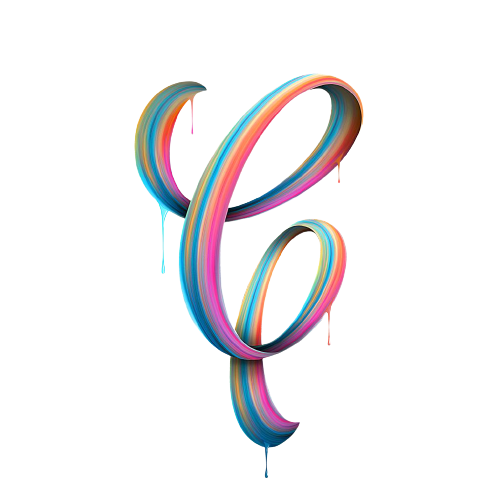
Throughout human history, the concept of infinity has played a central role in shaping cultural symbols, artistic designs, and philosophical ideas. The visual motif of an infinite loop—an unending, cyclical form—serves as a powerful metaphor for continuity, eternity, and the cyclical nature of existence. This article explores how infinite loops manifest across diverse cultural contexts, from ancient mythology to modern digital media, revealing their profound significance in human understanding of time, life, and society.
Contents
- Introduction to Infinite Loops in Cultural Symbolism
- The Concept of Infinity in Mythology and Religion
- Infinite Loops in Artistic and Architectural Patterns
- Symbolism of Infinite Loops in Literature and Language
- Infinite Loops in Modern Media and Technology
- Psychological and Philosophical Dimensions of Infinite Cycles
- The Non-Obvious Depths: Infinite Loops as Metaphors for Life and Society
- Case Study: Modern Cultural Symbols
- Conclusion: The Universal Language of Infinite Cycles
1. Introduction to Infinite Loops in Cultural Symbolism
Infinite loops are visual and conceptual representations of unending cycles. Commonly depicted as closed, circular, or Möbius strip-like forms, these shapes symbolize continuity, eternity, and the cyclical nature of existence. In human culture, repetition and continuity are fundamental themes, reflecting our perception of time, life, and spiritual beliefs. These symbols serve as visual anchors for concepts like rebirth, renewal, and the eternal return, often appearing in myths, art, and rituals.
This article examines how infinite loops transcend mere imagery, embodying profound cultural and psychological meanings. From ancient creation stories to contemporary digital interfaces, the motif of endless repetition reveals humanity’s ongoing fascination with eternity and the endless cycle of life and death.
Explore further:
- The Concept of Infinity in Mythology and Religion
- Infinite Loops in Artistic and Architectural Patterns
- Symbolism of Infinite Loops in Literature and Language
- Infinite Loops in Modern Media and Technology
- Psychological and Philosophical Dimensions
- Metaphors for Life and Society
- Modern Cultural Symbols: A Case Study
2. The Concept of Infinity in Mythology and Religion
Ancient cultures frequently incorporated the idea of infinite cycles into their cosmology and religious narratives. For example, creation myths often describe the universe as emerging from an unending cycle of destruction and rebirth. The Hindu concept of Kali Yuga and the cyclical nature of time underscores this belief in eternal recurrence. Similarly, many indigenous myths depict the world as continually recreated through dance, ritual, and storytelling, emphasizing the timelessness of cosmic processes.
Religious symbols such as the ouroboros—a serpent eating its tail—embody this notion of eternal return. The ouroboros appears in Egyptian, Greek, and Norse traditions, symbolizing infinity, unity, and renewal. Likewise, the endless knot, prominent in Buddhist art, signifies the interconnectedness of all things and the perpetual cycle of life, death, and rebirth. These symbols reflect a human attempt to grasp the infinite nature of existence beyond linear time.
3. Infinite Loops in Artistic and Architectural Patterns
Cultural artifacts such as Celtic knots exemplify the artistic use of infinite loops. These intricate, unbroken interlacing patterns, characterized by their endless paths, symbolize eternity and interconnectedness. Their continuous lines suggest that life and spirit are woven into an unbreakable unity, resonating with spiritual beliefs in everlasting life.
Mandalas, originating from Hindu and Buddhist traditions, incorporate circular, symmetrical designs that radiate from a central point. Their repetitive geometric patterns evoke the infinite nature of the universe, serving as tools for meditation and spiritual reflection. Modern artists and designers have adapted these motifs, integrating them into contemporary art, branding, and architecture to symbolize harmony and continuity.
| Pattern | Cultural Origin | Symbolic Meaning |
|---|---|---|
| Celtic Knots | Celtic Culture | Eternity, interconnectedness |
| Mandalas | Hindu & Buddhist Traditions | Unity, cosmic order |
4. Symbolism of Infinite Loops in Literature and Language
Literature often employs cyclical themes and motifs that create narrative loops, reflecting the repetitive nature of human experience. Classic examples include the hero’s journey, which often cycles through stages of departure, initiation, and return, echoing the eternal cycle of growth and renewal. Additionally, stories like the myth of Sisyphus, condemned to eternally push a boulder uphill, symbolize perpetual struggle and hope within endless repetition.
Cyclical storytelling structures—such as circular narratives—reinforce this motif by ending where they began, emphasizing themes of recurrence and the inescapability of certain life patterns. Language itself can mirror infinite recursion; for example, recursive phrases or self-referential statements demonstrate how ideas can be looped endlessly, mirroring the concept of infinity in communication.
5. Infinite Loops in Modern Media and Technology
In technology, infinite loops are fundamental to operations like algorithms, which process data through repetitive cycles. These processes underpin everything from search engines to artificial intelligence. In digital media, the concept of perpetual processes creates engaging user experiences, often blurring the line between entertainment and endless repetition.
A compelling modern example is the slot game mechanic exemplified by Get the best bonus for Rainbow Riches Freespins here. Here, the game’s design involves a maximum of 999 free spins, creating an almost-infinite cycle that evokes the psychological tension of endless play. The near-milestone of 1000 spins symbolizes the boundary between finite and infinite, triggering feelings of anticipation and anxiety about reaching an unending loop of chance and hope.
| Aspect | Relevance |
|---|---|
| Maximum Free Spins | Symbolizes near-infinite cycle |
| Chance & Repetition | Engages players through anticipation |
6. Psychological and Philosophical Dimensions of Infinite Cycles
Humans perceive time as both linear and cyclical. The idea of eternity challenges our understanding of finiteness, often leading to existential reflection. Psychologically, perpetual repetition can evoke hope—believing in renewal—or frustration, feeling trapped in unchangeable routines. Studies suggest that repeated rituals and routines provide comfort, but excessive repetition may also lead to monotony and despair.
“Infinite cycles in human perception serve as both a source of comfort and existential challenge—balancing hope with the fear of eternal recurrence.” – Philosophical reflections on time
Philosophers like Nietzsche have debated whether the universe is destined to repeat infinitely, giving rise to the concept of the eternal return. Such ideas continue to influence contemporary thought about human destiny and the nature of reality.
7. The Non-Obvious Depths: Infinite Loops as Metaphors for Life and Society
Societies often exhibit cyclical patterns—wars, economic booms and busts, social movements—that echo the motif of infinite loops. These recurring themes suggest that history may be less linear than it appears, often repeating similar crises and resolutions. Personal routines—habits, rituals, and daily cycles—also reflect our search for meaning within repetitive structures.
Modern symbols like the mechanics of gambling, where the outcome hinges on chance within a cycle of spins, mirror deeper cultural anxieties and hopes. The near-infinite nature of certain game designs embodies societal fears of endless repetition and the desire for eventual renewal or escape.
8. Case Study: Modern Cultural Symbols — The Example of Rainbow Riches Freespins
The game mechanic of Rainbow Riches Freespins exemplifies the application of infinite loop symbolism in contemporary culture. The maximum of 999 free spins creates a near-infinite cycle, evoking the tension between finite gameplay and the allure of endless possibility. Players often experience a mixture of hope and anxiety as they approach the symbolic milestone of 1000 spins, representing a boundary that teeters between the finite and the infinite.
This design taps into universal themes of chance, persistence, and the desire for limitless reward. The psychological response—anticipation of crossing a threshold—mirrors broader cultural narratives about the human quest for eternity and the fear of being trapped in endless cycles of struggle and hope.


Recent Comments